

Blog
Key Parts of Commercial Refrigeration Systems Explained

Introduction
When you run a restaurant, supermarket, or food storage facility, keeping your products at the right temperature isn’t just important—it’s critical. That’s where commercial refrigeration systems come in. But to keep them running smoothly and efficiently, it helps to understand what’s happening under the hood.
In this blog, we’ll explore the main parts of a commercial refrigeration system, what each one does, and why regular maintenance is so important for your business.
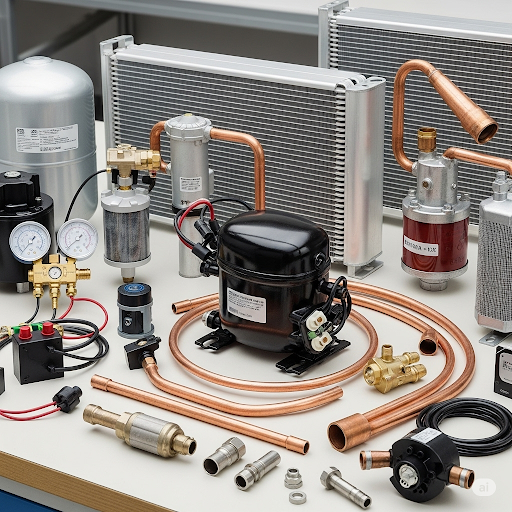
🧊 1. Compressor – The Heart of the System
What It Does:
The compressor is often called the “heart” of the refrigeration system. It compresses low-pressure refrigerant gas into high-pressure gas and sends it to the condenser.
Why It Matters:
Determines cooling power
Impacts energy efficiency
Most common part to fail if overworked or poorly maintained
Pro Tip:
Keep the compressor clean and well-ventilated to prevent overheating.
🌬️ 2. Condenser Coil – The Heat Releaser
What It Does:
The condenser coil removes heat from the refrigerant gas, turning it into a liquid. It’s usually located at the back or bottom of the fridge.
Why It Matters:
Helps maintain cold temperature inside
A dirty condenser = poor cooling + higher electricity bills
Pro Tip:
Clean the coils every 2–3 months using a brush or vacuum.
💧 3. Expansion Valve – The Pressure Dropper
What It Does:
This small but critical valve reduces the pressure of the liquid refrigerant so it can enter the evaporator and absorb heat.
Why It Matters:
Controls how much refrigerant flows
Maintains correct temperature range
Can cause frost or freezing issues if faulty
🌡️ 4. Evaporator Coil – The Cooling Zone
What It Does:
Located inside the unit, the evaporator coil absorbs heat from the air, cooling the interior. This is where the refrigerant turns back into a gas.
Why It Matters:
Directly affects how cold your fridge or freezer gets
Ice build-up here means poor airflow and weak performance
Pro Tip:
Regularly defrost and keep fans clear to allow air to circulate freely.
🔌 5. Thermostat – The Brain
What It Does:
The thermostat monitors and controls the internal temperature of the refrigeration unit.
Why It Matters:
Prevents overcooling or undercooling
Protects perishables from spoiling
Can be digital or mechanical
Pro Tip:
Calibrate it occasionally or replace if readings seem off.
🧰 6. Fans & Motors – The Air Movers
What They Do:
These circulate cold air throughout the unit and help dissipate heat from the condenser.
Why They Matter:
Ensure even cooling inside
Protect other parts from overheating
Often the first part to wear out due to dust and grease
Pro Tip:
Check fan blades and motor bearings during regular maintenance.
💡 7. Defrost System – The Ice Manager
What It Does:
In freezers and low-temp fridges, the defrost system prevents ice from building up on coils.
Why It Matters:
Maintains airflow
Avoids excess energy usage
Can be manual, time-based, or automatic
Pro Tip:
If you notice frost buildup, the defrost timer or heater might need repair.
🔐 8. Gaskets & Door Seals – The Cold Keepers
What They Do:
Rubber gaskets around fridge doors ensure that cold air stays inside.
Why They Matter:
Prevent air leaks
Help maintain steady temperature
Reduce compressor workload
Pro Tip:
Check regularly for cracks or looseness—replace if needed.
🧊 Final Thoughts: Why Knowing These Parts Matters
Understanding the major components of your commercial refrigeration system isn’t just for technicians. It helps you:
Detect early signs of failure
Reduce energy consumption
Avoid costly food spoilage
Extend the lifespan of your equipment
Whether you run a busy restaurant, a cold storage facility, or a grocery store, a well-maintained refrigeration system is a silent partner in your success.

 Commercial Refrigerator
 Commercial Freezer
 Sandwich & Salad Prep Table
 Glass Door Merchandiser Fridge
 Open Air Merchandisers
 Undercounter Refrigerators
 Undercounter Freezers
 Remoted Condenser Ice Maker
 Self Contained Ice Maker
 Bakery Display Case
 Commercial Ranges with Ovens
 Commercial Charbroilers
 Commercial Griddles
 Commercial Fridge Freezer Combo
 Commercial Fryers
 Commercial Hot Plates
 Commercial Stock Pot Ranges and Burners